Common Sun Skink
Latin: Eutropis multifasciata (Mabuya multifasciata)
Family: Scincidae
Order: Squamata
English: Common Sun Skink, Many-lined Sun Skink, Many-striped Skink
Indonesian: Kadal Kebun
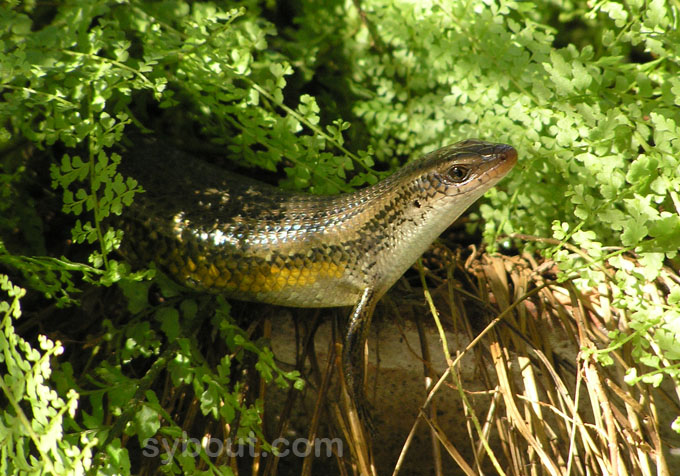
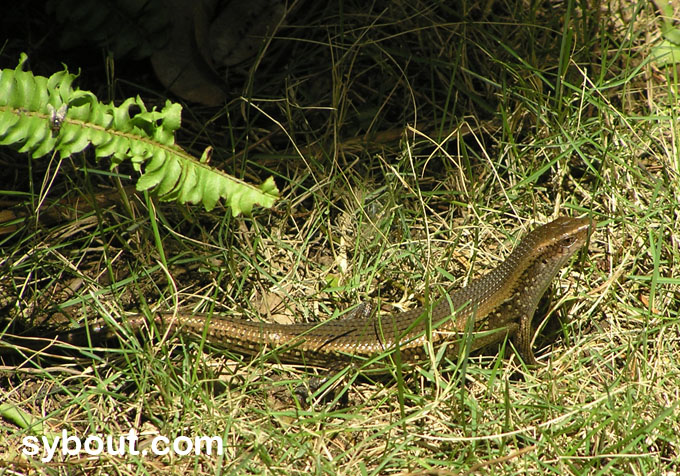
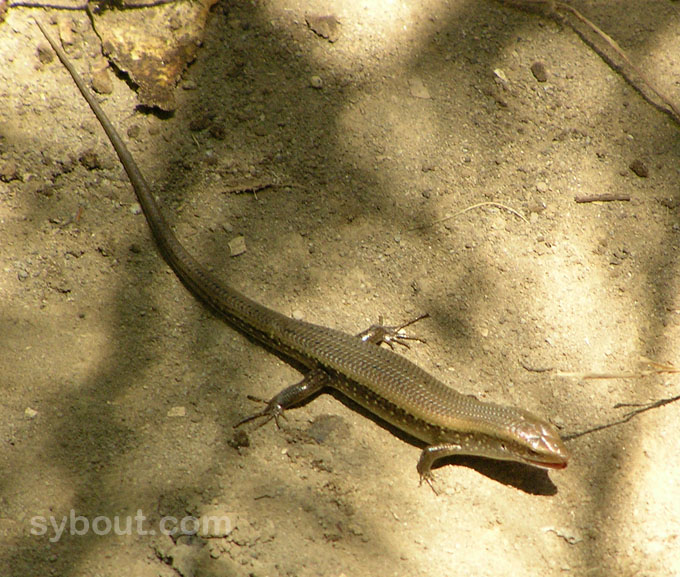
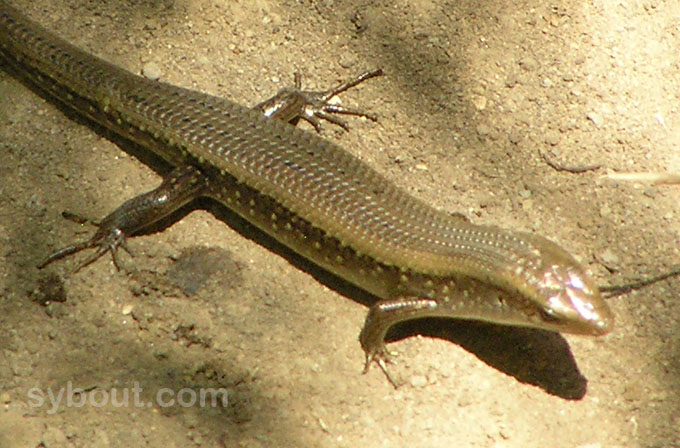
Several times I have been waiting for the skinks living in our back yard to move to the
right position for being photographed. They live near (or in?) a pile of dead branches
and leaves in the corner of the garden.
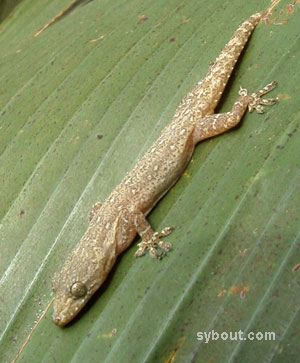
Initially I took this animal for a Garden Supple Skink: Lygosoma
bowringii (Riopa bowringii), but N S Wong kindly informed me that the correct name is Mabuya multifasciata (Eutropis multifasciata). The animal in the picture seems to be a female:
Dorsal scales are keeled, usually distinctly tricarinate (three-ridged).
The main distinct difference from the males is that the females have many white spots (ocelli) that are edged distinctly by black colouration.
Not including the tail it is about 12 cm long. Its total length, including the tail, will be around 30 cm.
This skink has a greenish-brown skin. Depending on the light direction it shows indistinct lines on the back
(running from head to tail) and small spots at the side of the body.
The animal is very shy, and that is the reason it
can survive in our garden. Our female cat is an every-day hunter
that has a special interest in this kind of reptiles. Too often I
find a dropped (or bitten off?) skink or gecko tail already crowded
by ants. But that is part of the laws of the jungle (and garden) I guess.
Spiny-tailed House Gecko
Latin:Hemidactylus frenatus
Family: Gekkonidae
Order: Squamata
English: Spiny-tailed House Gecko, Common House Gecko
Indonesian: Cecak kayu
Size (snout to vent) : 6.5 cm ; (total length) : 13.5 cm
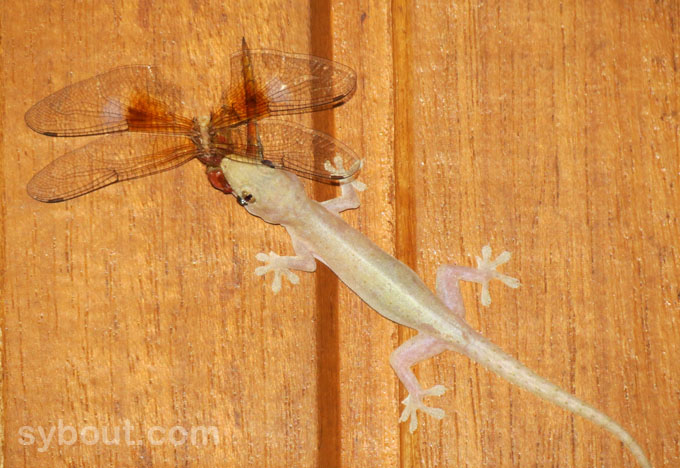
Most geckos I find after dark
sitting around the outdoor lamps above the terrace. The lamps
attract insects, and these are an important part of the geckos'
diet. It is interesting to see them waiting and then suddenly
attacking with unexpected fast moves.
In the daytime geckos still
are active, but will hide in the shade of leaves, the eaves of the
roof or other shelter.
The name of the 'Spiny-tailed House
Gecko' is related to the fact that this gecko has characteristic rows of
spiky tubercles along its tail. The colour of this species can vary
from very light to dark brown.
Its other name, 'Common House
Gecko', tells us that this gecko is common in many areas.
Beside in many parts of
Asia its distribution ranges from East and South Africa to Mexico.
In many tropical and sub-tropical areas the Common House Gecko is
not indigenous, but was introduced.
Flat-tailed Gecko
Latin: Cosymbotus platyurus
Family: Gekkonidae
Order: Squamata
Indonesian: Cecak tembok
Size (snout to vent): 6.5 cm ; Size (total length): 13 cm
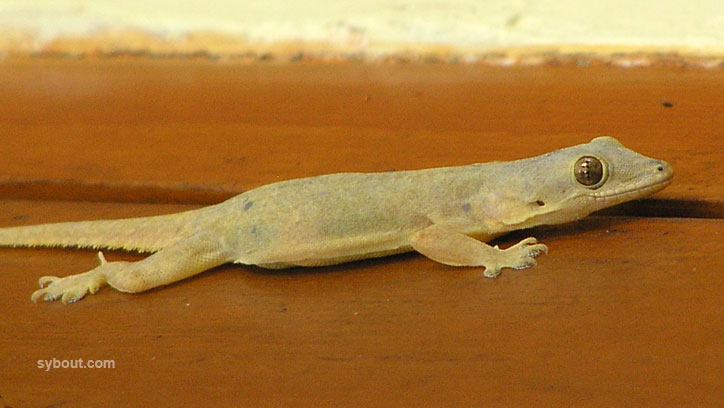
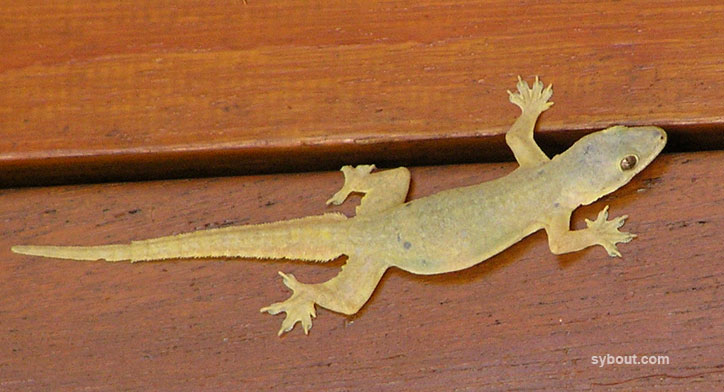
This gecko is common in many areas. First I thought
it to be a Four-clawed Gecko. After making some better photos I could see some important details.
Based on its tail which is serrated along the edge I think it is
safe to say this is a Flat-tailed Gecko. An other characteristic are
the half-webbed fingers. Though this gecko is said to be nocturnal,
I see it often active in the daytime on the walls under overhanging
roofs.